
4th Kenji Ishihara Colloquium Series on Earthquake Engineering
Impact of Climate Change on Community Earthquake Resilience
September 2nd, 2022
Virtually on Zoom
Human-induced climate change is becoming a global climate crisis. Natural hazards are increasing in frequency and intensity. New challenges are arising to earthquake professionals. Issues such as sea level rise, heavy rainfalls, and wildfires are making communities more seismically vulnerable. What are these new challenges in terms of community earthquake mitigation and resilience? How is the occurrence of earthquakes on top of natural hazards exacerbated by human-induced climate change affecting community earthquake resilience? What and how may earthquake professionals contribute to solve this global climate crisis? A global problem demands a global solution; what are the next steps in this direction?
These and other questions will be discussed and addressed to provide some information and guidance about community earthquake resilience, the roles of earthquake professionals, and what other professionals are doing addressing other natural hazards directly affected by the global climate crisis.
Click the image on the right to view event flyer.
PROGRAM
All times are in Pacific Daylight Time (PDT).
Opening Remarks
| EERI | 8:00am | 8:05am |
| UCSD | 8:05am | 8:10am |
Session 1: Keynote Speakers – Moderator: Jorge Meneses
| Prof. Susan Cutter | Disaster Inequality and Equitable Risk Reduction | 8:15am | 8:45am |
| Dr. Therese McAllister | Enabling Community Resilience through Design Practices | 8:45am | 9:15am |
| Prof. Benjamin Zaitchik | Anticipating and addressing complex climate hazards | 9:15am | 9:45am |
| Discussion Panel | 9:45am | 10:15am | |
| Break | 10:15am | 10:30am |
Session 2 – Moderators: Zahraa Saiyed and Tasneem Sadeque
| Prof. Daniel Armanios | The Role of Physical Infrastructure on Inequality | 10:30am | 11:00am |
| Dr. Sahar Derakhshan | Intersection between climate change and earthquake resilience: Community resilience | 11:00am | 11:30am |
| Vance Taylor | The Whole Community: We Succeed or Fail Together | 11:30am | 12:00pm |
| Discussion Panel | 12:00pm | 12:30pm | |
| Lunch Break | 12:30pm | 1:30pm |
Session 3 – Moderator: Alvaro Celestino
| Prof. Hussam Mahmoud | Resilience of Healthcare Systems under the Compounding Impact of Pandemics and Climate-Intensified Wildfires | 1:30pm | 2:00pm |
| Prof. Adam Rose | What Businesses Can Do to Plan for Recovery from Earthquakes and Climate Change Impacts Simultaneously | 2:00pm | 2:30pm |
| Prof. Negar Elhami-Khorasani | Planning for fire following earthquake considering interconnected infrastructure systems | 2:30pm | 3:00pm |
| Discussion Panel | 3:00pm | 3:30pm | |
| Break | 3:30pm | 3:45pm |
Session 4 – Moderator: Hamidreza Sarmadi
| Dr. Alex Grant | The Impacts of Sea Level Rise on San Francisco Bay-area Liquefaction Hazard | 3:45pm | 4:15pm |
| Steve Moddemeyer | Command and Control is for Emergencies. Shared Values is for Adaptation and Recovery | 4:15pm | 4:45pm |
| Dr. Kit Miyamoto & Dr. Amir Gilani | Impact of climate change on the performance of the built environment | 4:45pm | 5:15pm |
| Discussion Panel | 5:15pm | 5:15pm | |
| Closing Remarks | 5:45pm | 5:50pm |
Click here to learn about our colloquium speakers and read presentation abstracts.
Click here to view replays of the colloquium sessions.
PLATFORM
Zoom link will be provided to registered attendees prior to the event.
REGISTRATION
Click here to register for the colloquium.
ORGANIZING COMMITTEE
Chair: Dr. Jorge Meneses
Alvaro Celestino
Janna Bonfiglio
Tasneem Sadeque
Kristen Chang
Hamid Sarmadi
Prof. Gilberto Mosqueda
Ricardo Bustamante
Kayla Erler
For sponsorship opportunities, please contact Dr. Jorge Meneses at jmenesesl@gmail.com.
4th Kenji Ishihara Colloquium Series on Earthquake Engineering
Artificial Intelligence Applications in Earthquake Engineering
September 1st, 2022
In-Person: University of California, San Diego
Virtually: Zoom
Artificial intelligence is rapidly developing, enhancing the role of data science in many disciplines including earthquake engineering. Applications of artificial intelligence are currently present in many aspects of our daily lives (e.g. automated driving cars, finding directions between two locations, facial recognition, e-commerce and marketing, healthcare, gaming, hiring processes, etc.). When big data or data analytics is involved, like in many aspects of earthquake engineering, artificial intelligence emerges as the efficient response.
This symposium will present and discuss current applications of artificial intelligence in different aspects of earthquake engineering and related disciplines.
Click the image on the right to view event flyer.
PROGRAM
All times are in Pacific Daylight Time (PDT).
Opening Remarks
| Registration and Breakfast | 7:00am | 8:00am |
| EERI | 8:00am | 8:05am |
| UCSD | 8:05am | 8:10am |
Session 1 – Moderator: Jorge Meneses
| Prof. Krishna Kumar | Can we trust AI models in Earthquake Engineering? | 8:15am | 8:45am |
| Prof. Adrian Rodriguez-Marek et al. | Use of Machine Learning Tools to Evaluate Site Terms in Ground Motion Models | 8:45am | 9:15am |
| Prof. Scott Brandenberg | Relational Databases to Facilitate Ground Motion and Liquefaction Data Science | 9:15am | 9:45am |
| Discussion Panel | 9:45am | 10:15am | |
| Break | 10:15am | 10:30am |
Session 2 – Moderator: Alvaro Celestino
| Prof. Jamie Padgett and R. Rincon | Facilitating seismic risk and resilience analysis in heterogenous and multi-scale systems | 10:30am | 11:00am |
| A. Tamhidi and Prof. Yousef Bozorgnia | Artificial Intelligence and Earthquake Engineering; Application for Seismic Performance of Soft-Story Buildings | 11:00am | 11:30am |
| R. Silva and Prof. Jack Baker | Deep learning-based retrofitting and seismic risk assessment of road networks | 11:30am | 12:00pm |
| Discussion Panel | 12:00pm | 12:30pm | |
| Lunch Break | 12:30pm | 1:30pm |
Session 3 – Moderator: Janna Bonfiglio
| Prof. Karianne Bergen | Explainable AI for Seismology: An interpretable convolutional neural network architecture for earthquake detection | 1:30pm | 2:00pm |
| Dr. Qingkai Qong | Crowdsourcing Earthquake Information Enabled by AI | 2:00pm | 2:30pm |
| Dr. Youzuo Lin and Will Reichard Flynn | Spatio-Temporal Graph Convolutional Networks for Earthquake Source Characterization | 2:30pm | 3:00pm |
| Discussion Panel | 3:00pm | 3:30pm | |
| Break | 3:30pm | 3:45pm |
Session 4 – Moderator: Kristen Chang
| Prof. Youssef Hashash and Okan Ilhan | Deep Learning-Based Site Amplification Models for Central and Eastern North America | 3:45pm | 4:15pm |
| Prof. Jorge Macedo | Machine learning-based procedures for estimating seismically-induced slope displacements | 4:15pm | 4:45pm |
| Prof. Hiroyuki Miura | Application of AI Technology for Estimating Site Amplification Factor from Microtremor H/V Spectral Ratio | 4:45pm | 5:15pm |
| Discussion Panel | 5:15pm | 5:45pm | |
| Closing Remarks | 5:45pm | 5:50pm |
Click here to learn about our symposium speakers and read presentation abstracts.
Click here to view replays of the colloquium sessions.
VENUE
University of California, San Diego
Structural and Materials Department (SME), 2nd floor
Room SME 248
9500 Gilman Dr.
La Jolla, CA 92093
Parking information coming soon!
Zoom link will be provided to registered attendees prior to the event.
REGISTRATION
Click here to register for the symposium.
LODGING
Click here for a list of hotels near UCSD.
TRANSPORTATION
Transportation to and from the venue can be utilized through Uber or Lyft. Click here for directions to get to the venue.
ORGANIZING COMMITTEE
Chair: Dr. Jorge Meneses
Alvaro Celestino
Janna Bonfiglio
Tasneem Sadeque
Kristen Chang
Hamid Sarmadi
Prof. Gilberto Mosqueda
Ricardo Bustamante
Kayla Erler
For sponsorship opportunities, please contact Dr. Jorge Meneses at jmenesesl@gmail.com.
EERI San Diego Chapter Webinar Series
PUNCTUATED RESILIENCE
Friday, December 3rd, 2021
12:00pm-2:00pm PST
Zoom
The concept of punctuated equilibrium, as advanced by Stephen Jay Gould, will be applied to infrastructure. The evolution of key infrastructure policies will be traced. Professor Emeritus Tom O’Rourke (Cornell University) will present “Punctuated Resilience” and discuss how infrastructure resilience is punctuated by its relationship to natural hazards and climate change. He will also discuss how punctuated resilience is an important mechanism for improving the engineering and management of critical facilities. The agents of change that lead to improved policies and approaches are explored, including the technical, institutional, and social challenges of introducing new technologies and engaging community support.
Professor Emeritus Christopher Wills (UC San Diego) will present “Punctuated Equilibrium and How It Works.” In 1972, Niles Eldredge and Stephen Jay Gould introduced the term “punctuated equilibrium” to describe the bursts of evolution that follow sudden major changes in the Earth’s environment, and the long periods of relative stasis that lay between these giant events. Now, we realize that many groups of organisms have managed to survive even the severest punctuations, and that waves of extinction have taken place throughout periods of stasis. Major extinction events do put severe stress on the entire biosphere, but we will see how Darwinian evolution enables life to recover from these stresses and often takes life in new directions even without giant environmental disasters.
This presentation is free and open to the public.
REGISTRATION
Click here to register for the webinar. After registering, you will receive a confirmation email containing information about joining the meeting.
PROGRAM
| EERI Announcements | 12:00pm-12:15pm |
| TBA | 12:15pm-12:35pm |
| "Punctuated Equilibrium and How It Works" Prof. Emeritus Christopher Wills (UCSD) | 12:35pm-12:55pm |
| "Punctuated Resilience" Prof. Emeritus Tom O'Rourke (Cornell University) | 12:55pm-1:20pm |
| Q&A | 1:20pm-2:00pm |
SPEAKERS
Tom O’Rourke
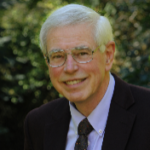
Tom O’Rourke is the Thomas R. Briggs Professor of Engineering Emeritus in the School of Civil and Environmental Engineering at Cornell University. He is a member of the US National Academy of Engineering, Distinguished Member of ASCE, International Fellow of the Royal Academy of Engineering, Member of the Mexican Academy of Engineering, and a Fellow of the American Association for the Advancement of Science. He authored or co-authored over 410 technical publications, and has received numerous awards for his research. His interests cover geotechnical engineering, earthquake engineering, underground construction technologies, engineering for large, geographically distributed systems, and geographic information technologies and database management.
Christopher Wills
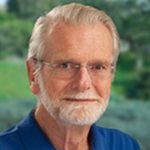
Born in England, Christopher Wills grew up in Canada. From 1972 until his retirement in 2010 he was associate and full professor of biology at the University of California, San Diego. He was the first to deliberately select for genetic variants in enzymes. He has explored the roles of genetic recombination in the maintenance of genetic variation in Drosophila and yeast, and the role of microsatellite DNA variation in the evolution of diseases and the evolution of our species. Most recently, he has organized a large group of ecologists from around the world to apply new analytical methods to the forces that are maintaining variation in complex ecosystems such as rainforests and coral reefs. He has written eight books for the general public on evolution and ecology. In 1999 he received the Award for Public Understanding of Science and Technology from the American Association for the Advancement of Science.
EERI San Diego Chapter Webinar Series
EERI STUDENT OUTREACH EVENT: A HIGH SCHOOL STUDENT’S DEVELOPMENT OF A LOW-COST SEISMOMETER
Thursday, November 18th, 2021
4:00pm-5:00pm PST
Zoom
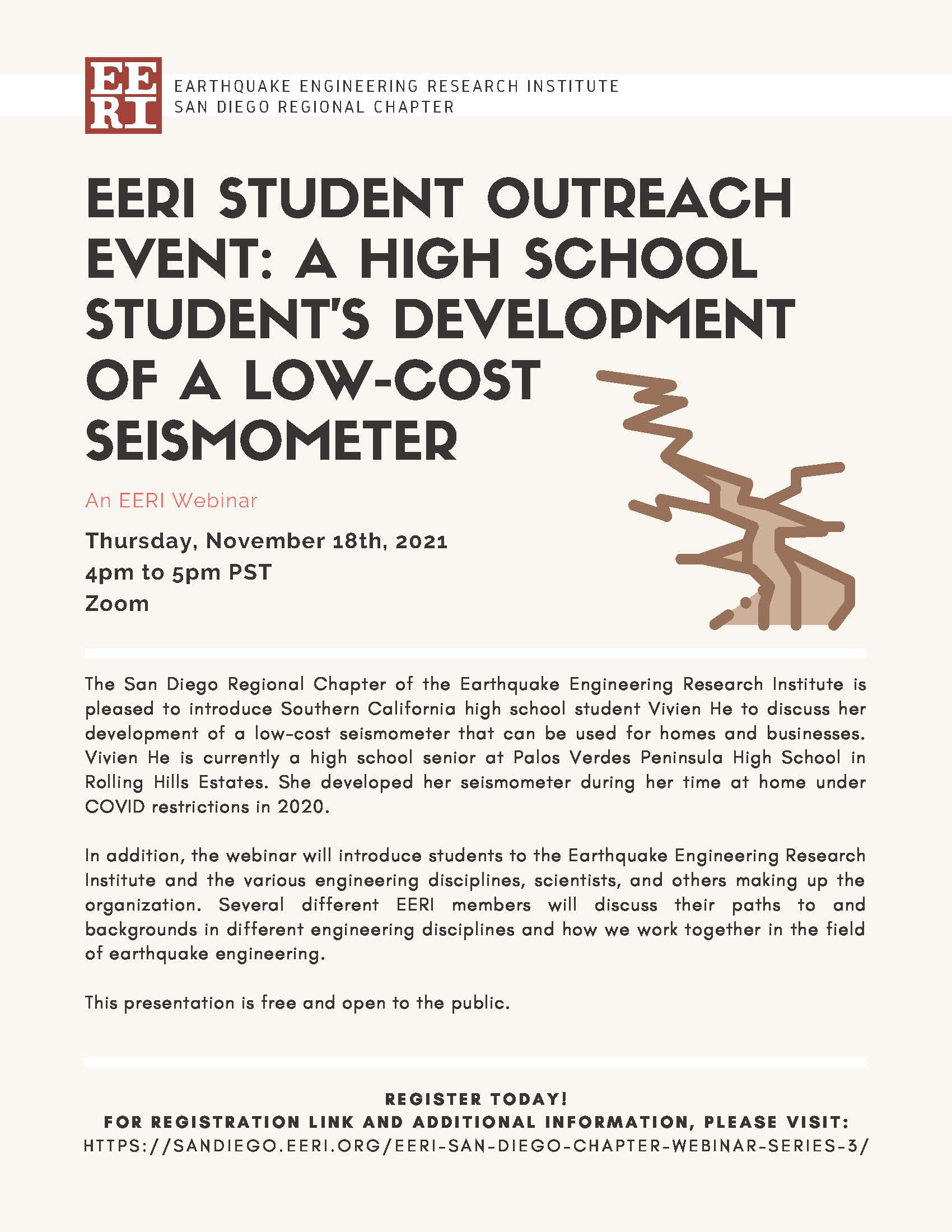
The San Diego Regional Chapter of the Earthquake Engineering Research Institute is pleased to introduce Southern California high school student Vivien He to to discuss her development of a low-cost seismometer that can be used for homes and businesses. Vivien He is currently a high school senior at Palos Verdes Peninsula High School in Rolling Hills Estates. She developed her seismometer during her time at home under COVID restrictions in 2020. In addition, the webinar will introduce students to the Earthquake Engineering Research Institute and the various engineering disciplines, scientists, and others making up the organization. Several different EERI members will discuss their paths to and backgrounds in different engineering disciplines and how we work together in the field of earthquake engineering.
This presentation is free and open to the public. You may click the image on the right to view the event flyer.
REGISTRATION
Click here to register for the webinar. After registering, you will receive a confirmation email containing information about joining the meeting.
PROGRAM
| EERI Introductions and Announcements | 4:00pm-4:10pm |
| "Working in Earthquake Engineering" EERI Team Member Discussion | 4:10pm-4:30pm |
| "Development of a Low-Cost Seismometer" Vivien He | 4:30pm-4:50pm |
| Q&A | 4:50pm-5:00pm |
Speaker Information: 3rd Kenji Ishihara Colloquium Series on Earthquake Geotechnical Engineering
Base Isolation, Damping Systems, and Soil-Structure Interaction
Speakers and Abstracts
Ian Aiken, Ph.D., P.E.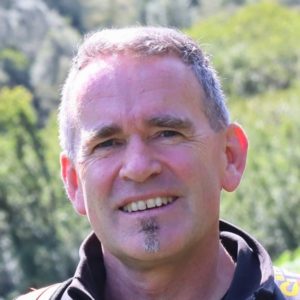
Principal, Seismic Isolation Engineering, Inc.
Seismic Damping: An Overview of Device Types, Design and Code Considerations
Abstract: Ian will give a snapshot overview of some of the different types of seismic damping devices and applications in the U.S. and internationally, the main aspects of the ASCE 7 and ASCE 41 requirements for structures with damping systems, and discuss some of the engineering and implementation considerations for using seismic dampers that differ from more typical building design, such as analysis requirements, the need for device testing, and the peer review process.
Bio: Ian Aiken is a Principal with Seismic Isolation Engineering, Inc., in Berkeley, California, and has more than 30 years of experience in earthquake, structural and civil engineering. He holds a Bachelor of Engineering degree from the University of Auckland, New Zealand, and Masters and Doctoral degrees in Civil Engineering from the University of California, Berkeley. His particular areas of expertise are seismic isolation and passive energy dissipation for seismic structural control, and the use of nonlinear analysis methods for structural analysis. He has worked on nearly 100 seismic isolation and energy dissipation projects including many notable building, bridge and industrial structures worldwide. For more than 20 years Ian has been extensively involved in the development, testing and implementation of buckling-restrained braces in the U.S., with notable firsts including the first project in the U.S., the first hospital in California and the U.S., the first bridge in the U.S. to use BRBs, and recently the Wilshire Grand Tower in Los Angeles.
Ian has been a member of state and national committees on isolation and energy dissipation, including ASCE, AASHTO and SEAONC committees, and FEMA-BSSC for the NEHRP national provisions.
Jay Love
 Senior Principal, Degenkolb Engineers
Seismic Design with Viscous Dampers: Retrofit Design Strategies
Abstract: One of the largest hospital facilities constructed in recent years in California, the new Sutter Health California Pacific Medical Center Van Ness Campus Hospital opened to patients on March 2, 2019.The $2.1B project produced a 13-story, 989,230 square foot hospital, including patient beds, diagnostic and treatment centers, and subterranean parking. Van Ness Campus Hospital consolidated the acute care services of two older Sutter Health California Pacific Medical Center (CPMC) campuses to create their flagship San Francisco hospital.
The structural system features a steel moment resisting frame with supplemental viscous wall dampers to reduce earthquake forces. Originally developed and implemented in Japan over the past three decades, this project marked the first application of viscous wall dampers in the United States. Through testing and nonlinear response history analysis, viscous wall dampers are expected to absorb nearly 90 percent of the earthquake energy at the Design Earthquake level.
Bio: Jay Love has more than 40 years of experience, including master planning, structural design, seismic evaluation, and retrofit design. He has considerable expertise in designing specialized buildings, particularly large and complex healthcare facilities. Jay’s notable projects include the new design of the new Sutter Health California Pacific Medical Center (CPMC) Hospital at Van Ness and Geary and the Kaiser Permanente, Los Angeles Replacement Hospital. Jay has overseen and served as project mentor on numerous healthcare projects for Stanford Health Care ValleyCare Medical Center – Pleasanton and Livermore, Stanford Hospital, Catholic Healthcare West, Kaiser Foundation Hospitals, Dignity Health, and Sutter Health.
Aaron Malatesta, P.E.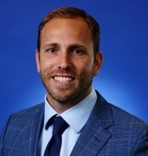
Structural Engineer
Seismic Design with Viscous Dampers: Retrofit Design Strategies
Abstract: Structural engineers have been using viscous dampers to protect new and existing building structures from seismic excitation for almost 30 years. There are a number of different types of damping applications, and the primary objective of this presentation will be to demonstrate the basic principles for supplemental viscous damping and how they can be applied for seismic retrofit of pre-Northridge steel moment frames and nonductile concrete moment frames. The presentation will include historical background and an overview of preliminarydesign concepts and simplified design procedures. Examples will be presented and alternative methods for construction detailing will be discussed.
Bio: Aaron Malatesta, P.E. is a structural engineering consultant in the field of energy dissipation devices and advanced seismic design. Mr. Malatesta graduated from Stanford University with a Masters degree in Structural Engineering. He has practiced structural engineering for consulting firms focused on both buildings and transportation infrastructure. As a licensed professional engineer in the state of California, he has been involved in the design and retrofit of a number of different types of structures. He has worked as a technical director for a viscous damper manufacturer leading the development of technical publications, management of research and development activities, and working with engineers to improve the performance of structures using viscous damping systems. He is actively involved in ASCE 7 and ASCE 41 committees for seismic isolation systems and energy dissipation devices.
3rd Kenji Ishihara Colloquium Series on Earthquake Geotechnical Engineering
Base Isolation, Damping Systems, and Soil-Structure Interaction
May 2021
Virtual Webinars
The Third Kenji Ishihara Colloquium Series on Earthquake Engineering will include a series of three webinars on the topics of Base Isolation, Damping Systems, and Soil-Structure Interaction. Three distinguished panelists will be invited to each webinar for a 20-minute presentation each and will be followed by a discussion with questions and answers under the lead of a moderator. This series of webinars target structural and geotechnical structures, architects, students, researchers, and building officials.
Click image on right to view event flyer.
PROGRAM
Webinar 1: Friday, May 14th, 2021, 12pm-1:45pm PDT
Base Isolation (Moderator: Professor Gilberto Mosqueda)
Click here to view a replay of this webinar.
Panelist 1 – Michael C. Constantinou, University at Buffalo, Testing of Seismic Protective System Hardware: Significance, Scaling and Similarity
Panelist 2 – Reid Zimmerman, KPFF, Changes in ASCE 7-22 for Seismically Isolated Structures and Recent KPFF Base-Isolated Projects
Panelist 3 – Simon Rees, Arup
Panelist 4 – Henry Tatham, Beca, Refurbishing a Base Isolated World First
Webinar 2: Friday, May 21st, 2021, 12pm-1:30pm PDT
Damping Systems (Moderator: Alvaro Celestino)
Click here to view a replay of this webinar.
Panelist 1 – Jay Love, Degenkolb Engineers, Application of Viscous Wall Dampers in the US
Panelist 2 – Ian Aiken, SIE Inc., Seismic Damping: An Overview of Device Types, Design and Code Considerations
Panelist 3 – Aaron Malatesta, Structural Engineer, Seismic Design with Viscous Dampers: Retrofit Design Strategies
Webinar 3: Friday, May 28th, 2021, 12pm-1:30pm PDT
Soil-Structure Interaction (Moderator: Jorge Meneses)
Click here to view a replay of this webinar.
Panelist 1 – Jonathan Stewart, UCLA, Seismic Earth Pressures on Retaining Walls based on SSI Principles
Panelist 2 – Bret Lizundia, Rutherford & Chekene, A Practical Guide to Soil-Structure Interaction
Panelist 3 – Sissy Nikolau, NIST, SSI and Functional Recovery
REGISTRATION
Click here to register for the colloquium.
Registration Fees
*EERI Student Members and EERI, ASCE, & SEOSD Members – Free
*Non-Members – $20/webinar or $40/three webinars
*Retired, Public Employees – $10/webinar or $20/three webinars
PDH Certificates will be issued upon request.
EERI San Diego Chapter Webinar Series
NEW AND REVISED ALQUIST-PRIOLO EARTHQUAKE FAULT ZONES IN SAN DIEGO
Tuesday, April 6th, 2021
12pm-2pm PDT
Virtual Webinar
On February 18, 2021, the California Geological Survey (CGS) released preliminary review maps of proposed new and revised Alquist-Priolo Earthquake Fault Zones to the City and County of San Diego (https://www.conservation.ca.gov/cgs/preliminary-releases). The City of San Diego has also posted the announcement here: https://www.sandiego.gov/sites/default/files/2021-02-26_earthquake_zones.pdf
The February 18, 2021 release date begins a 90-day public comment period to provide technical review comments on the proposed Earthquake Fault Zone maps. Comments should be sent to the State Mining and Geology Board before May 19th, 2021, and should be addressed to:
Jeffrey Schmidt, Executive Officer
State Mining and Geology Board
801 K Street, MS 20-15
Sacramento, CA 95814-3528
Email: smgb@conservation.ca.gov
Phone: (916) 322-1082
The State Mining and Geology Board (SMGB) will hold a public hearing near the end of the 90-day review period. For more information on the date and location of the public hearing, contact the SMGB by visiting www.conservation.ca.gov/smgb.
The EERI San Diego Chapter is organizing a webinar to provide background and further information on these new and revised maps. This free virtual webinar will be presented on Tuesday, April 6th, 2021 from 12pm-2pm with the following invited speakers:
1) Prof. Thomas Rockwell (San Diego State University)
2) Timothy Dawson (California Geological Survey)
3) Michael DeFrisco (California Geological Survey)
4) Discussion Q&A. Moderator: Dr. Jorge Meneses
ASCE EERI Joint Luncheon 2021
WHAT’S NEXT FOR THE SAN DIEGO EARTHQUAKE SCENARIO? PRE- AND POST-DISASTER LESSONS ON BUILDING COMMUNITY RESILIENCE
Tuesday, February 23rd, 2021
12:00pm-1:30pm
Virtual Meeting
Join EERI in a joint luncheon with ASCE San Diego Section, featuring guest speaker Dr. Laurie Johnson, EERI President. The presentation will discuss the use of smart materials in bettering structural performance against seismic activity.
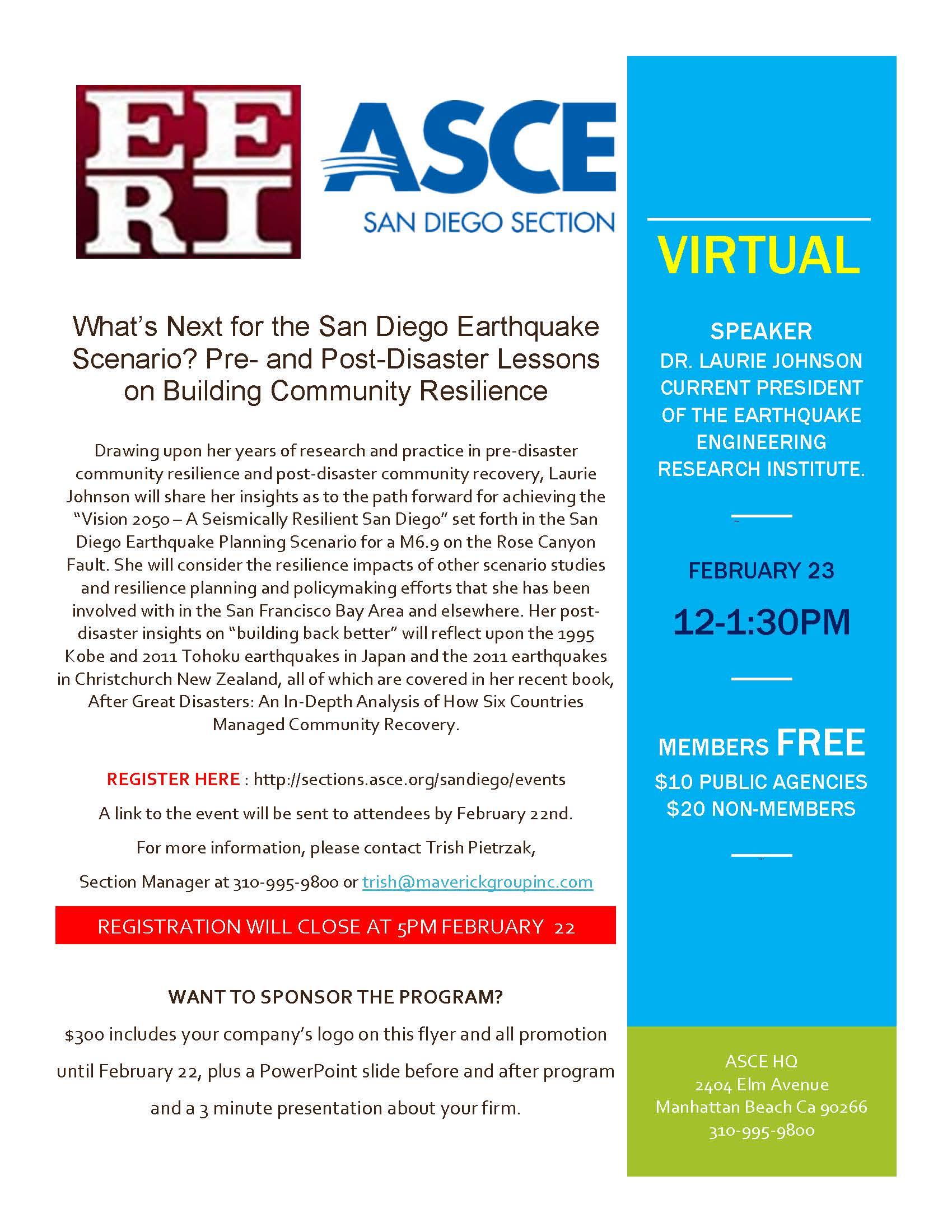
For members of EERI and ASCE = FREE
For non-members = $20.00
For public agency workers = $10.00
For more information, click the image to the right to view the event flyer.
REGISTRATION
Click here to register for the luncheon.
Registration closes on Monday, February 22, 2021 at 5pm PST.
EERI San Diego Chapter Webinar Series
APPLYING LESSONS LEARNED FROM COVID-19 TO EARTHQUAKE PREPAREDNESS
Global pandemics and large earthquakes are both events that have a low frequency of occurrence, but a high risk for loss of life and economic losses. As a result, our current experiences with COVID-19 can be useful for discussions about preparing for these “low frequency/high risk” events. Although currently our scientific knowledge and technology are better than they have ever been, in the past six months, COVID-19 has posed challenges for the world despite attempts to prepare for events such as this. This webinar series looks at how scenarios are used as a planning tool, what challenges can be encountered in preparing for events such as these, and what next steps can be taken for earthquake preparedness in our community.
Webinar 1: Friday, October 16th, 2020, 12:00pm PDT (day before anniversary of Loma Prieta Earthquake)
Using Scenarios for Preparedness: Comparing Pandemics and Earthquakes
View Recording of Webinar
Abstract: Scenarios are useful planning tools to help us prepare for future events, particularly events that have a low frequency of occurrence but a high risk of losses associated with them, such as large earthquakes and global pandemics. Several public health scenarios were developed in recent years to better understand and prepare for a global pandemic, prior to the COVID-19 pandemic. This webinar discusses the outcomes and conclusions of these scenarios, a comparison to our current experiences with COVID-19, and a comparison to existing earthquake scenarios and what we can learn from them in an effort to improve earthquake preparedness.
Webinar 2: Friday, October 30th, 2020, 12:00pm PDT
Common Challenges Preparing for Low Frequency/High Risk Events (Earthquakes and Pandemics)
View Recording of Webinar
Abstract: Preparing and planning for events that have a low frequency of occurrence but high risk of loss associated with them can have a number of obstacles that must be overcome in order to achieve success. These obstacles include changing public perception of risk, communicating information to a non-scientific population, and obtaining sustained political and financial support, amongst many others. These challenges are discussed in the context of our current experiences, and how those same challenges are encountered in planning for earthquakes and developing more seismically resilient communities. This webinar will also discuss some of the ways in which these challenges can be overcome by learning from the failures and successes of our experiences with COVID-19.
Webinar 3: Friday, November 13, 2020, 12:00pm PST
Next Steps for Earthquake Preparedness in Our San Diego Community
View Recording of Webinar
Abstract: Developing communities that are more earthquake resilient and better prepared for large disasters takes time, resources, and lots of planning. This webinar will focus on how to prepare in our community by looking at outreach, developing a group of stakeholders, and identifying short-term and long-term goals for San Diego. This webinar is intended to be more interactive, with discussion amongst stakeholders. The basis for this discussion will be the San Diego Earthquake Scenario released in March 2020, before the pandemic hit the San Diego region.
SPEAKERS
Jorge F. Meneses, Ph.D., P.E., G.E.,D.GE, F.ASCE, Principal Geotechnical Engineer, RMA Group, Inc.
San Diego, CA
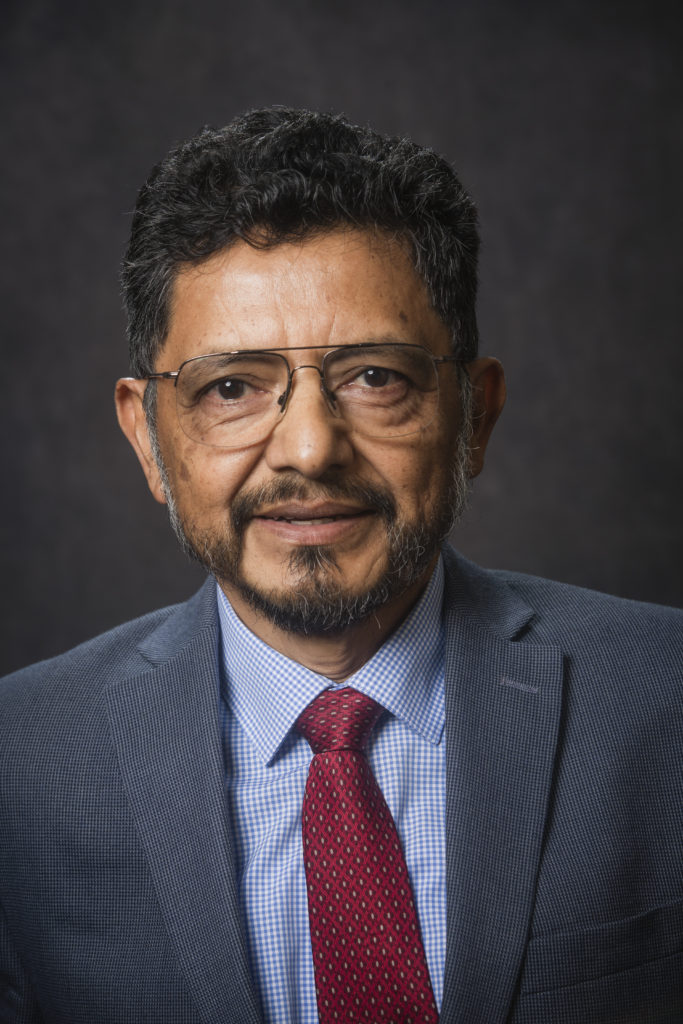 Jorge F. Meneses, Ph.D., P.E., G.E., D.GE, F.ASCE, Principal Geotechnical Engineer, RMA Group, Inc., has more than 30 years of consultancy, project management, research, and teaching experience, in both private industry and research institutions in the field of geotechnical and earthquake engineering. He has been involved in numerous projects serving as a technical lead in geotechnical earthquake engineering and foundation engineering across the country and various markets including water, nuclear, transportation, high rise buildings, energy, schools, hospitals, commercial and industrial.
Dr. Meneses frequently acts as a peer reviewer for technical conferences and technical journal publications, is a guest speaker for domestic and international conferences, and has published more than 60 technical publications. He is currently a part-time faculty member in the graduate school of San Diego State University. He is the President and Founder of the Earthquake Engineering Research Institute (EERI) San Diego Chapter, California Seismic Safety Commissioner, Honorary Chair of the ASCE Geo-Institute San Diego Chapter, Member of the ASCE 7-16 (Minimum Design Loads for Buildings and Other Structures) and ASCE 1 (Geotechnical Analysis, Design, Construction, Inspection and Monitoring of Nuclear Safety-Related Structures) Committees, member of the Industry Advisory Board, Department of Structural Engineering (University of California San Diego), member of the Academy of Geo-Professionals, and a Fellow of the American Society of Civil Engineers (ASCE).
Kristen Chang, P.E., Senior Geotechnical Engineer, Group Delta
San Diego, CA
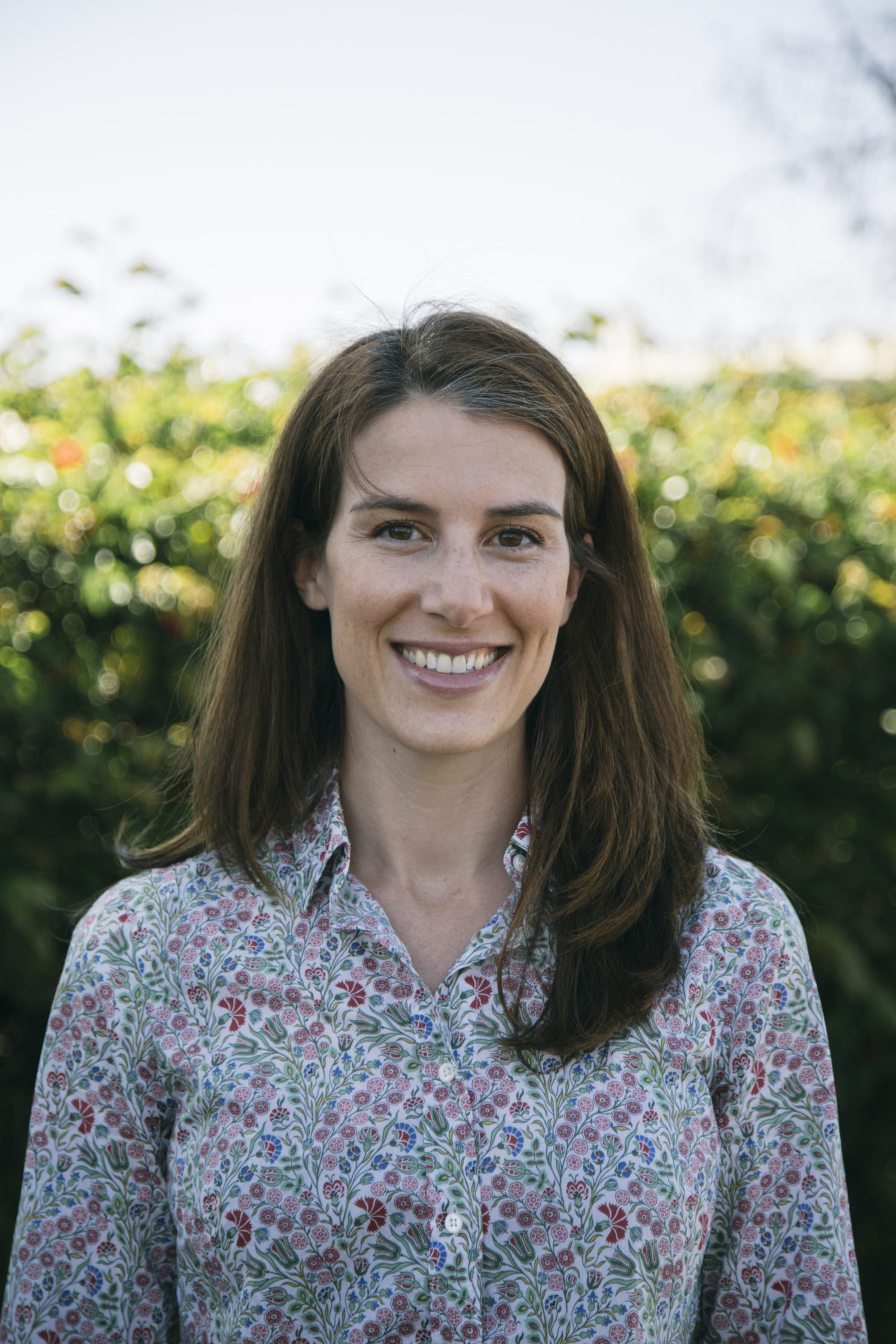 With over 12 years of experience, Ms. Chang has worked on a broad range of projects in the field of geotechnical engineering. Her areas of expertise include design of foundations and earth retaining structures, and geomechanical numerical modeling and analyses. She has performed geotechnical forensic evaluations for landslides and repair of failed slopes; structural distress induced by seismic events and other adverse geologic conditions; performance of floor level studies, foundation condition surveys, and crawlspace observations for damage assessments.
David Harrison, Assistant Director for Emergency Services, City of Carlsbad
Carlsbad, CA
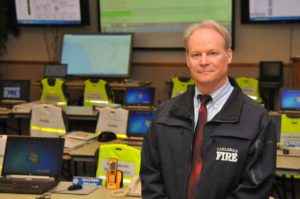 David Harrison is the Emergency Preparedness Manager for the City of Carlsbad, a position he has held for twelve years. David coordinated the city’s response to the 2007 San Diego County Firestorm, the 2010 H1N1 flu pandemic, and 2011 regional power outage. He provided response support during an active shooter attack in 2010. During the 2014 Poinsettia Wildfire which ravaged Carlsbad, he coordinated evacuations, sheltering and incident response support operations from Carlsbad’s EOC. During the 2017 Lilac Wildfire, he coordinated evacuation and sheltering support for neighboring jurisdiction evacuees.
David is Carlsbad’s representative to the San Diego County Unified Disaster Council and is an InfraGard San Diego Board Member. He is originator of Carlsbad CERT and co-founder of the Ready Carlsbad Business Alliance. David has served on the Advisory Board of, and taught in, National University’s Homeland Security and Emergency Management Program. He is a Past-President of the Carlsbad Hi-Noon Rotary Club.
David is a U.S. Navy Captain, retired. He commanded a warship, coordinated development of the Navy’s Antiterrorism and Force Protection Program, served as Navy representative to the FBI’s TWA 800 Joint Terrorism Task Force investigation, and developed the Concept of Operations for early warning, and missile and civil defense against Iraq’s SCUD missiles for the Government of Israel during the first Gulf War.
Ryan DeHart, Emergency Services Coordinator, County of San Diego Office of Emergency Services
San Diego, CA
Ryan joined the county as an Emergency Services Coordinator with the County of San Diego, Office of Emergency Services in February of 2018. His projects include overseeing and administering updates to the Multi-Jurisdictional Hazard Mitigation Plan, Earthquake, Tsunami, and Severe Weather Coordination, Medical/Health Liaison, Lifelines Coordinator, Spontaneous Volunteer Coordinator, and Intern Coordinator. In addition, Ryan also does collaborative work within Reunification Planning. Previously, Ryan worked as an Emergency Services Specialist with the County of San Benito, Public Health Services From June 2015 – January 2018, where he worked within communicable disease response and readiness, mass prophylaxis planning, hospital protection and healthcare readiness, exercise & training coordination, and regional collaboration within the Bay Area. Ryan has been involved in numerous responses including fulfilling EMMA requests to Napa County during the 2015 Atlas Fire (Tubbs/Atlas Complex), 2017 San Benito County Floods, and the 2018 West Fire. Ryan received his B.A. in United States Politics in 2015 from the University of Santa Cruz, where he also interned for the County of Santa Cruz Office of Emergency Services under their OES Manager, Paul Horvat.
ORGANIZING COMMITTEE
Chair: Dr. Jorge Meneses
Janna Bonfiglio
Alvaro Celestino
Kristen Chang
Octavio Cortes Macouzet
Maryam Motamed
Tasneem Sadeque
January 2020 Dinner Meeting
THE RACE FOR CITY EARTHQUAKE PREPAREDNESS
Wednesday, January 15th, 2020
6:00pm-8:30pm
Faculty-Staff Club, San Diego State University
San Diego, CA
 Approximately every 20 years, Southern California is hit by a moderate to large earthquake that causes loss of life and billions of dollars in damage. After a large earthquake, cities are faced with the challenge of rebuilding, restoring economical losses, and recovering from psychological impacts among the affected population. Old existing buildings and systems pose the largest threat to life and the economy. Cities in Southern California are working nonstop in this race for earthquake resilience before the next big one occurs. Speakers from Southern California cities will present on various topics of earthquake preparedness, including local jurisdictions and policies.
For members of EERI, ASCE, SEAOSD, SDAG, AIA = $40
For non-members = $45
For students = $20
Click image on right to view event flyer.
REGISTRATION
Click here to register for the meeting.
PRESENTATIONS
Earthquake Survivor Management: Local Jurisdiction Considerations
David Harrison
Planning for earthquake response and recovery is more complex than planning for wildfires, the region’s traditional hazard. Earthquakes will present with little to no notice, and the casualties and damage are likely to be far more extensive. This presentation will address local jurisdiction survivor management considerations and practices to enhance earthquake response and recovery. It recommends that cities develop independent mass care shelter capabilities to supplement Red Cross resources. And it offers a preparedness model to facilitate more comprehensive survivor management while reducing response times. While developed for public agencies, the concept and framework is equally applicable to the private sector.
Seismic Retrofit Ordinances from Southern California Cities: A Race to Prepare for a Major Seismic Event
Daniel Zepeda
In recent years, several cities in Southern California have been working on reducing their community seismic risk. These cities have taken the first step to achieve this goal by establishing seismic ordinances targeting their existing vulnerable building stock. The presentation will give a brief overview of the history of retrofit policies in Southern California cities. A brief comparison of active ordinance policies, prioritization, timeframes, technical guidelines, and building target performance will be provided. The presentation will conclude with thoughts on implementation best practices and a discussion on potential future policies.
When Help is Delayed
Susy Turnbull
In emergencies, first responders have an automatic mutual aid response. Non-profit agencies are trained and ready to respond to support the community. However, in a significant disaster, responders may be at a minimum, and damaged roadways can prevent help from arriving. In preparing for emergencies, businesses, local government, and neighborhoods can begin from within by training local residents to provide immediate response and continue with the relief efforts. Learn the process of volunteer recruitment, training, background checks, liability, and deployment.
Catastrophic Earthquakes in the Modern Age
Dan Pavao
It has been said that the only certainties in life are death, taxes, and earthquakes. But what will an earthquake look like in the modern age? How big can we expect an earthquake to be and when might it occur? Can we be ready for an earthquake and how can we best prepare for such an incident? These topics and more will be discussed as we look through the lens of history at earthquakes of the past and how our modern world may cope with similar events.
SPEAKERS
David Harrison, Assistant Director for Emergency Services, City of Carlsbad, Carlsbad, CA
David Harrison is the Emergency Preparedness Manager for the City of Carlsbad, a position he has held for twelve years. David coordinated the city’s response to the 2007 San Diego County Firestorm, the 2010 H1N1 flu pandemic, and 2011 regional power outage. He provided response support during an active shooter attack in 2010. During the 2014 Poinsettia Wildfire which ravaged Carlsbad, he coordinated evacuations, sheltering and incident response support operations from Carlsbad’s EOC. During the 2017 Lilac Wildfire, he coordinated evacuation and sheltering support for neighboring jurisdiction evacuees.
David is Carlsbad’s representative to the San Diego County Unified Disaster Council and is an InfraGard San Diego Board Member. He is originator of Carlsbad CERT and co-founder of the Ready Carlsbad Business Alliance. David has served on the Advisory Board of, and taught in, National University’s Homeland Security and Emergency Management Program. He is a Past-President of the Carlsbad Hi-Noon Rotary Club.
David is a U.S. Navy Captain, retired. He commanded a warship, coordinated development of the Navy’s Antiterrorism and Force Protection Program, served as Navy representative to the FBI’s TWA 800 Joint Terrorism Task Force investigation, and developed the Concept of Operations for early warning, and missile and civil defense against Iraq’s SCUD missiles for the Government of Israel during the first Gulf War.
Daniel Zepeda, Principal, Degenkolb Engineers, Los Angeles, CA
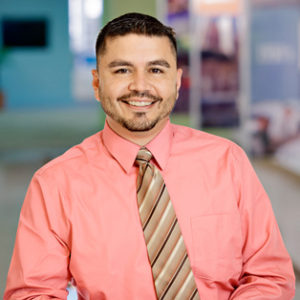 Daniel Zepeda received his Master’s degree in Structural Engineering from the University of California, Berkeley, he is a licensed California Structural Engineer, and a Principal with Degenkolb Engineers. With over 15 years of experience in seismic evaluation and seismic strengthening of existing buildings, Daniel’s project breadth spans large medical centers, civic buildings, and privately owned structures. Daniel has traveled to multiple countries to conduct post-earthquake reconnaissance. He is past chair of SEAOC EBC and current SEAOSC EBC co-chair. Daniel is also a member of the SEAOC Resilience committee, SEAOC Functional Recovery working group, CALBO’s Structural Safety Committee, and an associate member of ASCE 41-23. He is also assisting multiple cities in the implementation of their seismic ordinance programs including Santa Monica, Beverly Hills, West Hollywood, Pasadena, Culver City, and Los Angeles.
Susy Turnbull, Disaster Preparedness Coordinator, City of Poway, Poway, CA
Susy began her career with emergency management with the 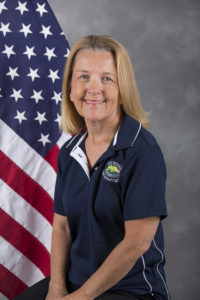 American Red Cross in 1995. In her twenty years with the Red Cross, she responded to multiple disasters throughout the nation to lead volunteers in providing much-needed relief to the affected communities. In 2015, Susy transitioned to local government and accepted the job as Disaster Preparedness Coordinator for the City of Poway. In this role, she writes and updates emergency plans, trains city staff to work in the Emergency Operations Center, and trains and leads over 100 local volunteers to respond to emergencies. Most recently, she led the Bulk Distribution efforts for the City’s response to the Boil Water Advisory. More than 120 volunteers donated over 1800 hours, and distributed more than 28,000 cases of water in six days. Susy lives in Santee and has a Bachelor’s Degree from San Diego Christian College in Counseling/Psychology.
Dan Pavao, Deputy Director of Community Development, City of El Cajon, El Cajon, CA
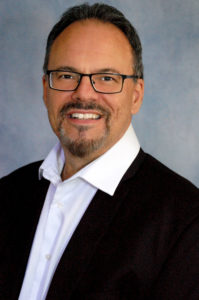 Dan Pavao is the Building Official and Fire Marshal for the City of El Cajon. Dan has chaired the California Building Officials Disaster Preparedness Committee as well as the Disaster Preparedness Committee of the San Diego Chapter of the International Code Council. He is a registered Coordinator for the State of California Safety Assessment Program.
VENUE
Faculty-Staff Club
San Diego State University
5500 Campanile Drive
San Diego, CA 92182
PARKING INFORMATION
Please park in Levels 3 through 5 of Parking Structure 1, which can be seen on SDSU’s interactive map or on Google Maps. Parking permits may be purchased through the following options:
- SDSU’s Parking Portal for a $7 one-day pass (under “Permits” click “Get Permits,” then click “Guests login here” under “Customer Authentication” and follow on-screen directions).
- PayByPhone smartphone app or website for $3.00 per hour + $0.35 service fee (location number 28501). You may also call PayByPhone at 1 (888) 515-7275 to pay.
- Pay Station at the Parking Information Booth on College Avenue and Canyon Crest Drive.
Directions to Parking Structure 1 and the Faculty-Staff Club:
From Interstate 8 East, take Exit 10 at College Avenue. Proceeding south, turn right at the stoplight onto College Avenue. Then, use the second lane from the left to turn left at the next stoplight–as you turn, you will see Parking Structure 1 immediately on your right. The entrances to Levels 3, 4, and 5 will also be on your right as you drive up behind the structure; please park on any of these three floors.
Take the elevator to Level 6. Then, cross the bridge at Level 6 and climb the set of stairs that run next to the Education and Business Administration Building (which will be on your left). Cross the street and proceed to the Faculty-Staff Club.
ORGANIZING COMMITTEE
Chair: Dr. Jorge Meneses
Janna Bonfiglio
Alvaro Celestino
Kristen Chang
Octavio Cortes Macouzet
Tasneem Sadeque